Edge Pulls for a Handle-Free Kitchen: Pros, Cons and Sizing
Oct 28,2026 | MATOOYA Hardware
Handle-free kitchens look calm and clean, and edge pulls (also called finger pulls) are the easiest way to get that look without push-to-open hardware or routed grooves. But they're not right for every cabinet. Here's an honest look at where they shine, where they don't, and how to choose the right size.
Edge pulls sit on the edge of the door, so the front stays clean.
What is an edge pull?
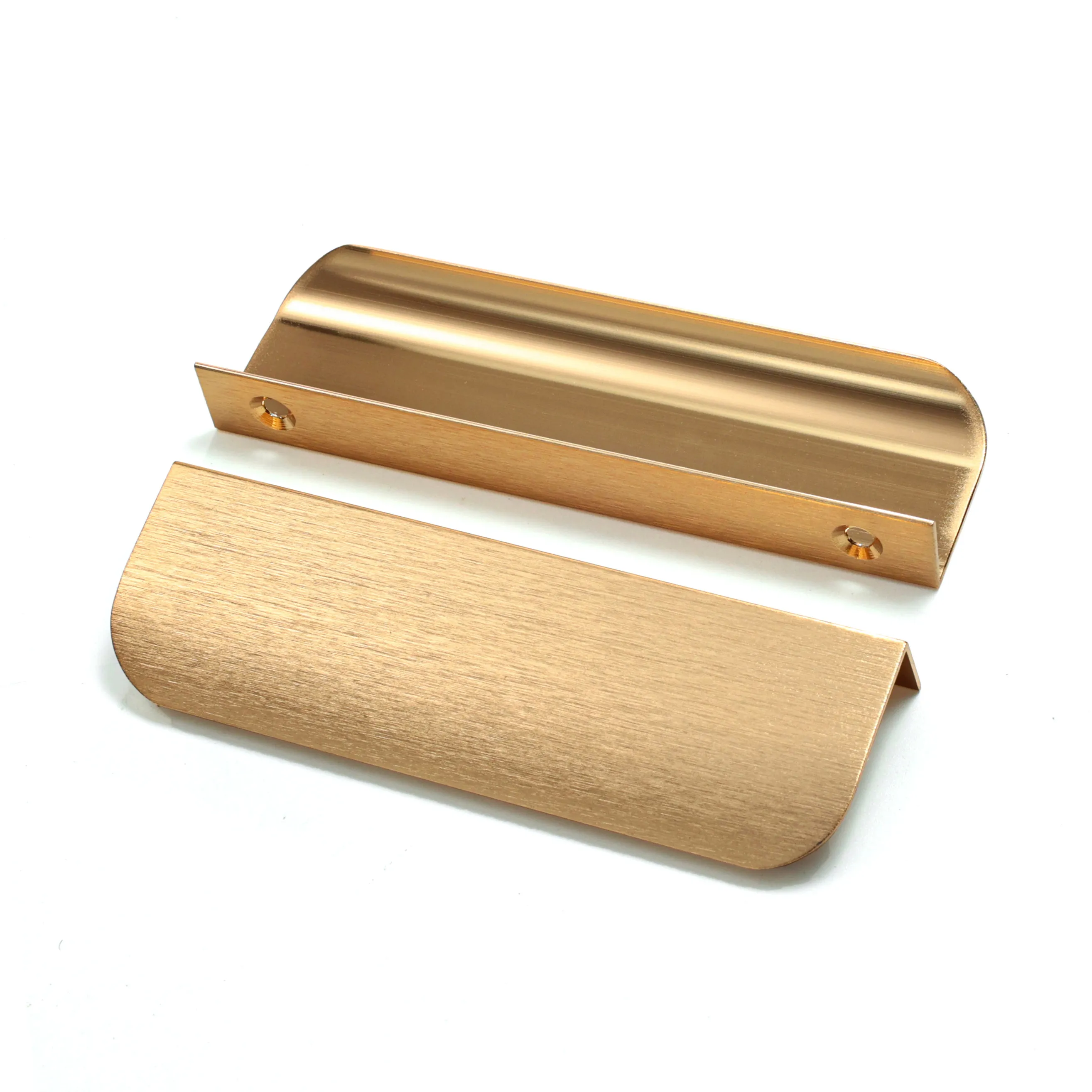
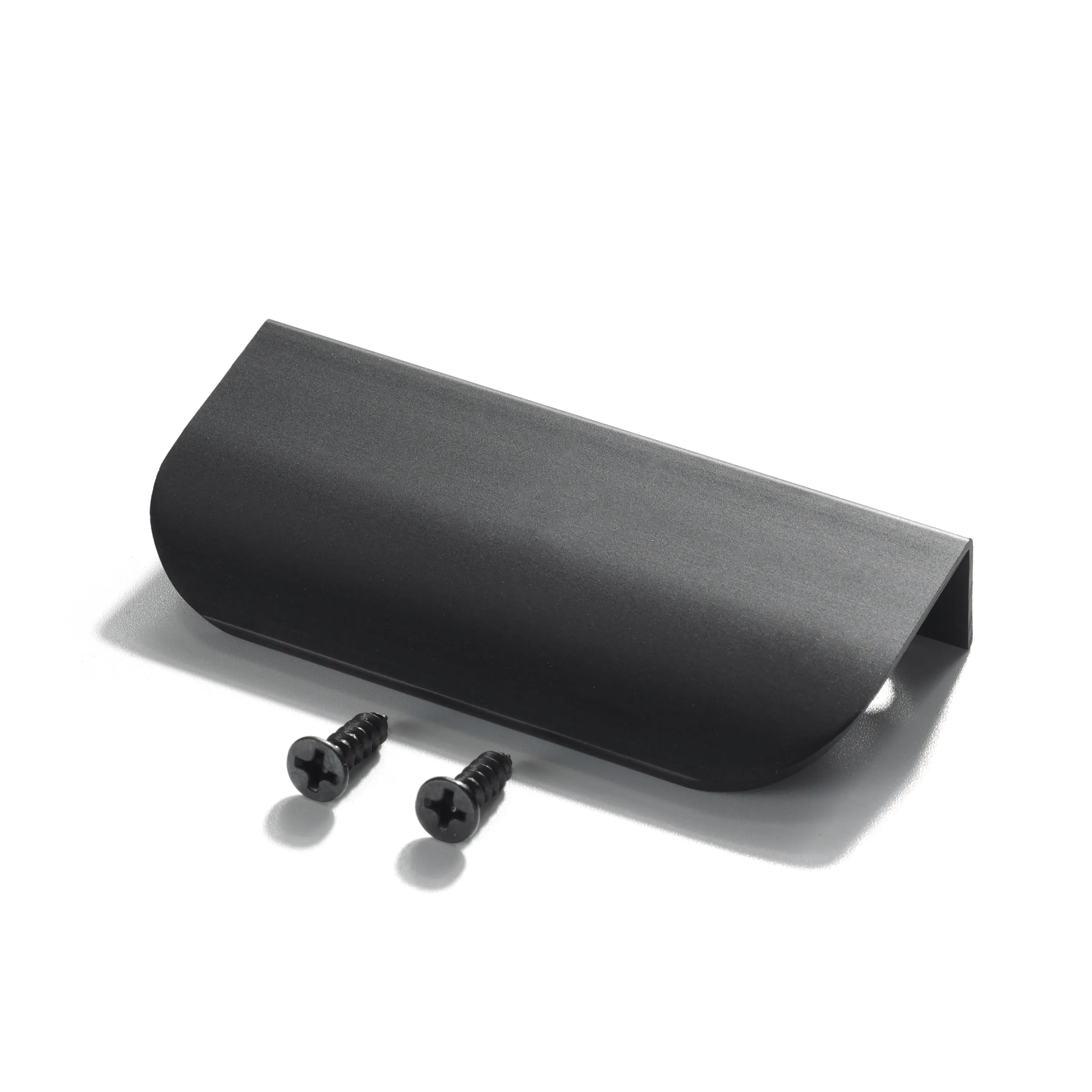
An edge pull is a slim metal profile that mounts on the top or side edge of a door or drawer. Instead of grabbing a handle that sticks out, you hook your fingertips under the lip. From the front you see only a thin line of metal, or nothing at all.
Why people love them
- Clean lines. Nothing breaks up the face of the cabinet, which is why they're a favorite on flat slab doors.
- Nothing to snag. No more catching a hip, a belt loop or a dish towel on a handle in a narrow galley kitchen.
- Easy to clean. Fewer nooks for grease and dust.
- Great for kids' rooms and hallways, where a protruding handle sits at exactly the wrong height.
The honest downsides
- They need a little clearance. A top-mounted pull on a base drawer needs a small gap below the countertop or the drawer above so your fingers can get in. Check this before you order.
- Heavy drawers are harder to open. For a deep pot drawer, choose a longer pull so you can get more fingers under the lip.
- They suit modern doors best. On raised-panel or ornate doors they can look out of place.
- Uppers mount on the bottom edge. For wall cabinets, the pull goes on the bottom edge of the door so you can reach it from below.
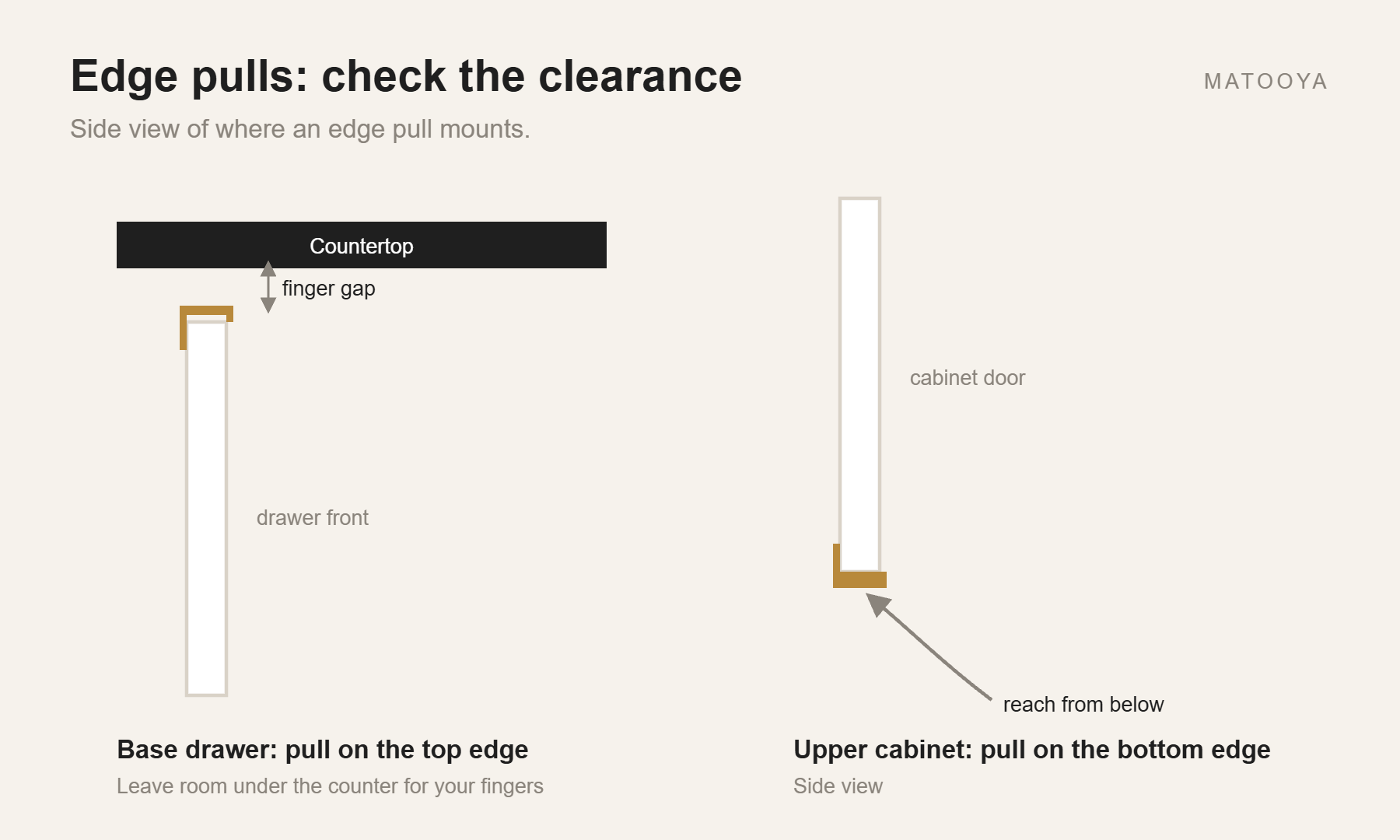
Base drawers: pull on top. Upper cabinets: pull on the bottom.
How long should an edge pull be?
There are two approaches, and both look good:
- Short and centered (80–150mm). Subtle, budget-friendly and ideal for doors and smaller drawers.
- Long and linear (300mm up to nearly the full width of the drawer). This gives a strong horizontal line across the kitchen. It's the most "designed" look, and it's easier to grab from anywhere.
Whichever you choose, keep the same style throughout the kitchen and limit yourself to two or three lengths.
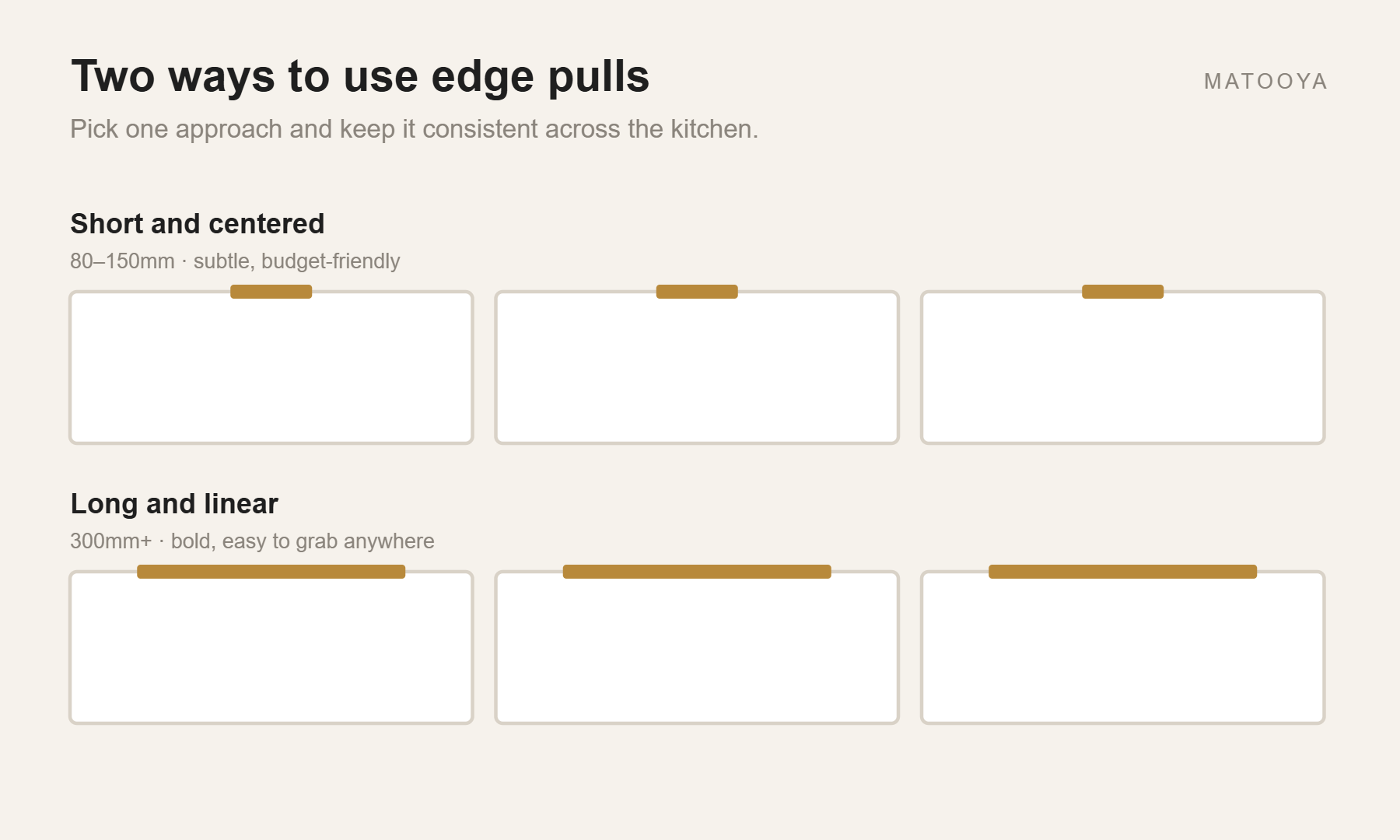
Short and subtle, or long and linear. Pick one and stay consistent.
Choosing a finish
- Black gives a crisp outline on white or wood cabinets.
- Brushed gold or bronze adds warmth. Warm metals are one of the strongest hardware trends right now.
- Matching the door color (for example, white on white) makes the pull almost disappear for a truly handle-free look.
Installation tips
- Check your door or drawer thickness and the screw length before drilling.
- Use a template and a square so every pull sits at the same height. Any misalignment shows clearly on a long, straight profile.
- Drill pilot holes first to avoid splitting the edge of the panel.
- Test the finger gap with a single pull before you install the whole kitchen.
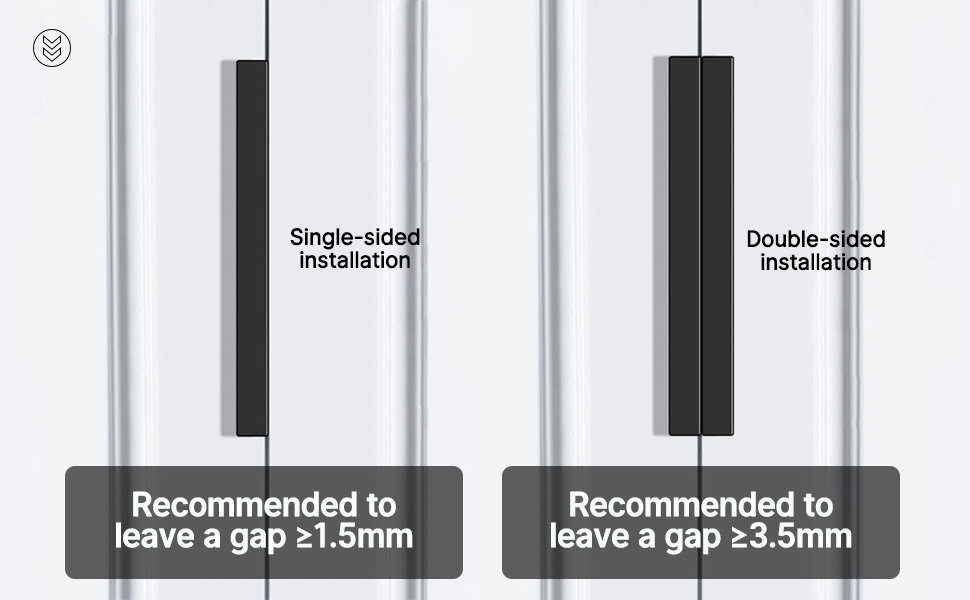
Leave a small gap between doors so the pull has room to work.
Where to start
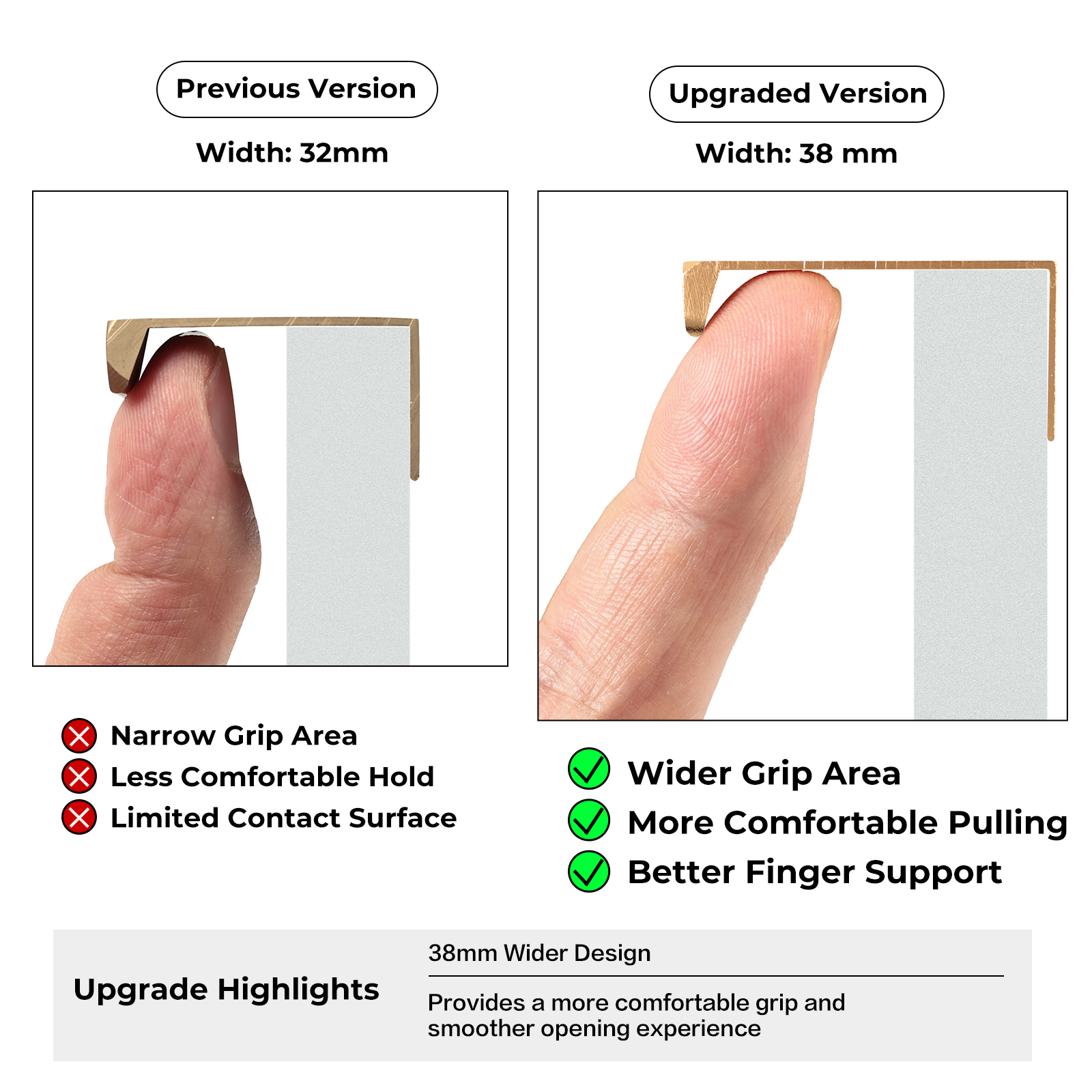
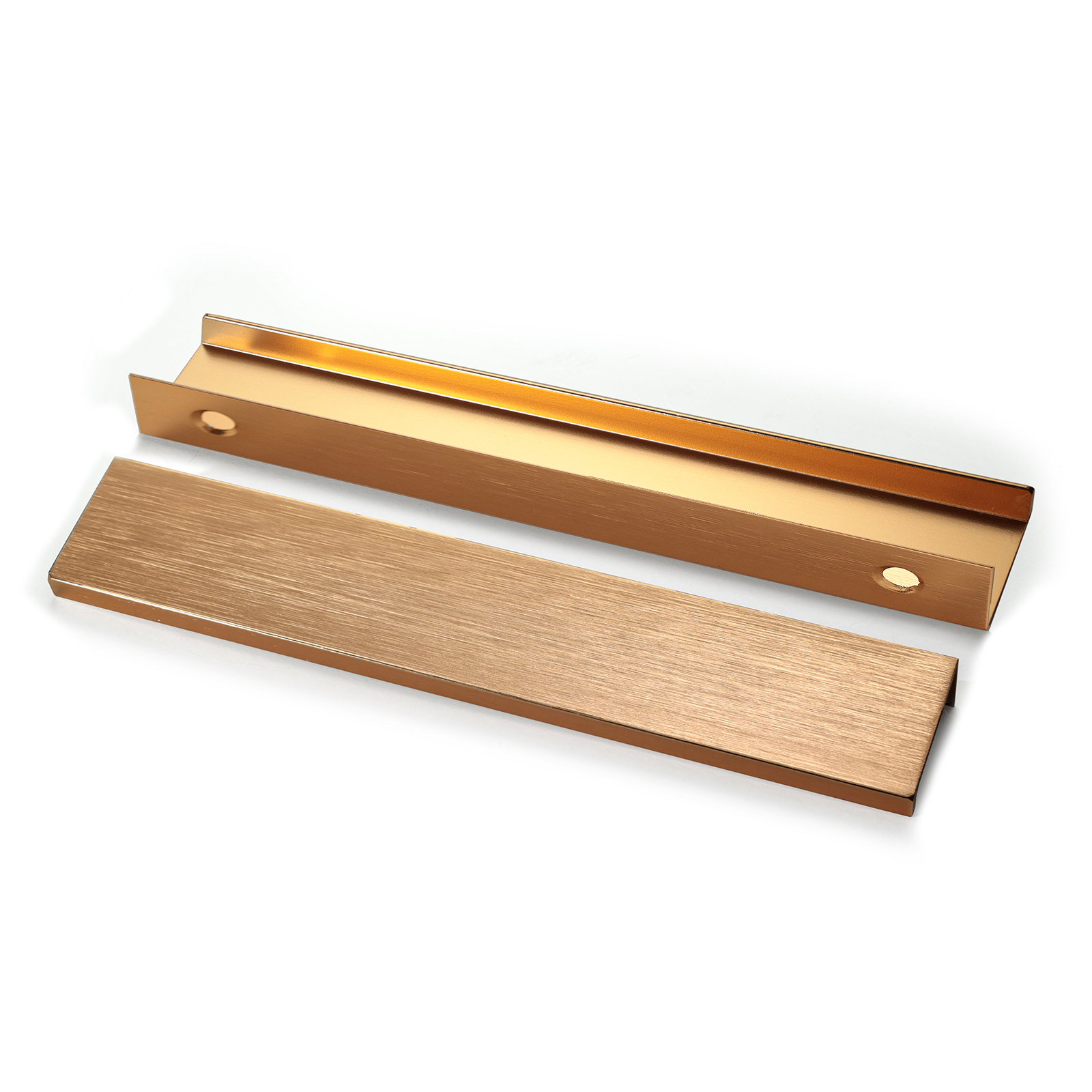
The thickened profile gives your fingers more to hold onto.
Our Thickened Finger Edge Pulls have a right-angle profile with a deeper lip for a firmer grip, in black, brushed bronze or brushed gold, 80–300mm. For long linear runs, the Long Kitchen Cabinet Pulls go all the way to 1200mm. Both come in 2, 4 and 8-packs at a lower price per pull, which helps when you're doing a whole kitchen. You can browse everything in Hidden & Finger Edge Pulls, and if you're not sure which length fits, check our size guide.